
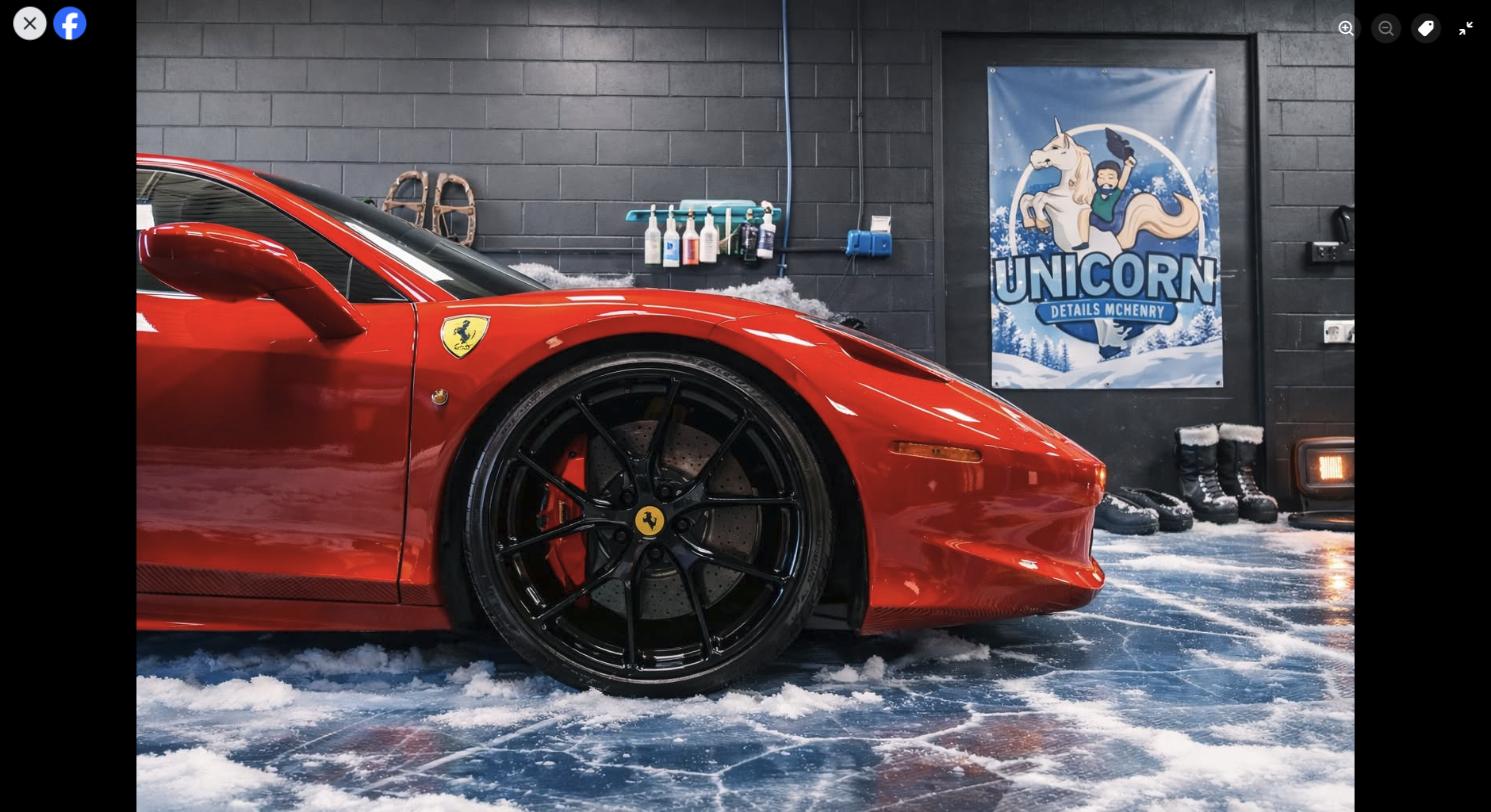
The best way to protect your car from road salt this winter in McHenry County is a ceramic coating on your paint and wheels combined with regular washing, especially the undercarriage, every couple of weeks through the season. Salt brine does its damage through repeated exposure, not one bad storm, so the goal is limiting how long it sits on your car between washes.
What Road Salt Actually Does to a Car
McHenry County road crews use salt and brine to keep roads clear, which is good for driving and hard on cars. Salt residue holds moisture against paint, wheels, and the undercarriage. Left long enough, that moisture accelerates oxidation and, on unprotected metal, actual rust. Wheels take the worst of it since they sit closest to the spray coming off the road.
Why Coated Cars Handle Winter Better
A ceramic coating creates a hydrophobic barrier that makes it harder for salt brine and grime to stick to the surface in the first place, and easier to rinse off when it does. This matters most on paint and wheels, which is why we offer coating specifically for both. To be clear about what coating does and does not do here: it protects against the chemical effects of salt exposure and makes cleanup easier. It will not stop a rock chip or a scrape from a snowbank, and it does not replace washing. Coating reduces how much salt sticks and how hard it is to remove. It does not make washing optional.
A Realistic Winter Care Routine
- Rinse the undercarriage and wheel wells every 1 to 2 weeks during active salting periods, even if the rest of the car looks clean
- Use a touchless or soft-touch wash rather than an automatic brush wash, which can grind salt crystals into the paint
- Address any fresh chips or scratches before winter sets in, since exposed metal rusts fastest when salt and moisture can reach it directly
- Do not let snow and slush sit against the car for days at a time in a driveway or parking lot
Frequently Asked Questions
Does ceramic coating stop rust?
It helps by reducing how much salt and moisture stick to the surface, but it is not a rust-proofing treatment. Existing chips or bare metal spots can still rust if salt reaches them directly.
How often should I wash my car in winter?
Every 1 to 2 weeks during active salting is a reasonable baseline, with extra attention to the undercarriage and wheel wells where salt collects most.
Is it too late to get ceramic coating once winter has started?
No. Coating can be applied any time of year as long as conditions allow proper curing. Getting it done mid-winter is better than waiting until spring after months of exposure.
Do wheels need a different coating than paint?
Wheels take more direct abuse from brake dust, heat, and road spray, so we use a coating formulated specifically for wheels rather than treating them the same as body paint.
Get Ahead of Winter
See our ceramic coating packages and pricing. Take our quiz to find the right coating package for your car and wheels, or book an appointment before the next storm rolls through McHenry County.
Unicorn Details McHenry is McHenry County’s Ceramic Coating Specialist, located at 3980 W Albany St, Unit 2, McHenry, IL 60050. Owner Joe Davison is IDA Certified (CD-SV), XPEL PPF certified, and a certified installer for IGL, Angel Wax, and Optimum Polymer Technologies coatings, with 600+ ceramic coatings completed since 2015 and hundreds of five-star Google reviews.